I am amused:
Mac vs PC: Computers Suck
https://www.youtube.com/v/bm7JH1FT_yM
I am amused:
Mac vs PC: Computers Suck
https://www.youtube.com/v/bm7JH1FT_yM
Rarely can I say a film manages to be satisfying and UNaatiafying at the same time.....but The Debt succeeds at this paradox. It also serves up an excellent example of 20th century Jewish literature meanwhile.
The story revolves around a set of 3 Mossad agents in two different times, 1966 and 1997. The 1997 frame tale takes all its motivation from the events in 1966, so the movie spends quite a while in the flashback. Both stories are superbly acted. The trailer revealed the 3 agents had traveled to Berlin to capture a notorious Nazi doctor, the "Butcher of Bierkenau." Things didn't go as planned; the trio lied to cover up the truth.
(SPOILER: the 2 men and 1 woman find the Nazi doctor and kidnap him, but they miss their pickup with the other agents through their own misfortune. The men could have made the drop if they'd abandoned the woman, but the more tender-hearted of the two men-David- had a soft spot for Rachel and refused to abandon her. the Nazi eventually escaped, but the 3 agreed to create a tale in which the injured Rachel mamges to shoot the guy as he tried to escape. Afterwards, having returned to Israel and a hero's welcome, Rachel hooks up with Stephan because David can't live with his conscience well enough to stay in her life.)
The plot hangs on the psychological and relational effects of a lie maintained for 30 years. Having absorbed all the glory of success for most of a lifetime, letting the truth come out would devastate their reputations. Even Rachel's daughter is at stake. An aspiring author, she just published a book about the incident.
This movie has incredible acting. Some of the best I've seen on screen. So believe me when I say I watched the entire film with intense interest.
(again, SPOILERS AHEAD). In the 1997 timeline, which climaxes the plot, Rachel finds the ancient Nazi stowed in a Ukrainian nursing home. Someone is threatening to publishe the truth, so she's sent to find him and stop it. She can kill the old man right there or walk away and let her daughter be dragged down along with the whole mess. It's a good ethical dilemma. After all, the IDEA of justice has carries them all for 30 years, not the reality. As far as the public is concerned, the man got his due. But the film begins to make a case for honesty. Ok.
This is where the ending left me with sawdust instead of resolution. I don't want to spoil the ending .... Let me just say that we get neither justice nor forgiveness.
Like so much Jewish writing in the post-Holocaust world, the Mossad agents cannot see anything except Justice. Every character in the film is controlled by their personal sense of righteousness. Their consciences haunt them, but resolution escapes them. Either they kill the man, or they live under the crushing weight of moral failure. Somehow Justice rests on their shoulders alone.
It is this moral one-sightedness that makes the film a tragedy in the final analysis. I wasn't hoping for forgiveness or a happy ending. But a world where crime merits only utter destruction (the alternative being moral compromise) makes for a dark film. I didn't want the agents to forgive the Nazi. Let him burn. But the idea tha they *alone* had the power to meet out justice--and failed, so now must do a lifetime of penance ...which culminates in a lie ....and then an attempt at honesty which will meanwhile destroy the innocent daughter.....? This is a brutal, cold world of Justice that I don't want to live in.
Props to the actors for outstanding performances.
Props also to the screenwriter who created incredible moments of tension and psychological terror. The film is worth your time just for the craft.
A certain cohort of BJU students understand ice cream on a roll. I admit, it's really weird. I tried it only because the older students at my Sunday lunch table were scarfing down the combo like it was holy. I figured it couldn't be just a mean prank against the freshman, so I tried it. Man. Fresh farm ice cream slowly melting inside a warm, slightly sweet Parkerhouse roll? Amazing.
Today I ran across a reference to Sicilians who put pistachio or almond gelato inside brioche for breakfast or a light summer snack. ohboy ohboy ohboy ohboy!
Jack and Coart and I are excited about the possibility of leading a group to Italy and Spain next May/June.
It's about time for me to recharge my Italy molecule, and I've always wanted to see Spain. And travel with Jack through Europe. He can talk to anyone....literally. He knows like every language.
This is feeling very "possible." We've gotten a lot of good feedback from people at NCS, Montessori, the general area, and even around the nation! There's a school in Kansas interested in sending some students with us too.
If you are interested, we're meeting on September 7th to give out information. Come if you want.

Robert Rosenstone, author of History on Film/Film on History:
"We always violate the past, even as we attempt to preserve its memory in whatever medium we use... Yet this violation is inevitable, part of the price of our attempts at understanding the vanished world of our forebears."
You need to watch this movie.
You will hate it. You will writhe in your chair during the last 20 minutes. You won't be able to get the images out of your mind.
In this case, that's exactly what ought to happen, and you need to see it.
The Stoning of Soraiya M tells a modified version of a true story from the early post-Shah days in Iran in the 1980s. A French-Iranian journalist wrote the book that forms the basis of the film. The plot is simple: a bad, adulterous husband sets up his wife to be accused of adultery so that he can be rid of her in order to marry a 14 year old girl he's already sleeping with. Cheery. If you've read the title, you know how this is going to end.
Finding out how the story went public pulls you through this dark tale of misogyny, oppression, religious hypocrisy, and ribald injustice. On the surface, some would see the film as anti-Islamic. I'd say it's more of a piece about the way power-holders (in any culture) can abuse their authority to smash other people. The husband's actions would be improper in any form of Islam. But the good-ol-boy network is alive and well in Iran just like anywhere else.
Rarely have I seen a story that literally turned my stomach. The rank injustice of it. The way the women were shackled with stupid laws. The abuse of those who are weak: it made me sick.
I'll be honest: watching the stoning, I questioned how God could ever put such a horrific form of capital punishment in the Law. Coart reminded me that ancient law was often far less gracious, that stoning was a restricted form of punishment in the Mosaic law, and that public participatory execution is designed to keep people honest. (As Christ asked, are you arrogant enough to throw the first stone...unless it's an overwhelming example of a crime?) But I didnt find those intellectual arguments very convincing against the ugliness of it all. I will be thinking on this point for some time. Perhaps I am a soft, Western modern, but I can't really think of more than one or two crimes that would merit such horrific physical abuse in the name of Justice. Stoning makes the electric chair look like a hug from your grandma.
I recommend this difficult yet well-told story for these reasons:
1). Islam is foreign to many Americans.
While I do need to caution folks not to take the story to be a representation of Islamic theology, it IS an accurate portrayal of how hyper-conservative Islam beats up on people (male and female). If you want to understand what the people of Iran or Saudi Arabia have been subjected to for the past several decades, this will do.
2). We tend to forget what injustice looks like.
Not that America doesn't have a lot of it's own injustice to deal with (don't get me started on Alabama's ugly anti-immigrant law or the way current local, state, and federal budget cuts affect primarily the poor), but our idea of injustice is shaped within a relatively just legal code. A woman in Soraiya's position if she lived here would have had some shred of hope.
3). Domestic abuse is a vile crime.
We dont talk about it. People don't want to hear about criminal domestic violence. But SC is 3rd in the nation for CDV. I hope a thoughtful watcher of this film would move from self-righteous condemnation of the village leaders to an appalled realization that SC "villages" don't do a very good job of protecting their women from abusive jerks either.
While you're at it, go make a donation to Safe Harbor here in town. Because very few people are willing to hear that we need abuse shelters in our city in 2011.
4). Biblical gender roles cannot be used to justify oppression.
Sometimes the whole patriarchy movement in evangelicalism really worries me. We need to stop reacting to our culture and its perceived excesses and start teaching about relationships that are shaped by love and respect. Apart from the stoning, the women's roles portrayed in this film match what I have read in some Internet posts by Christians in the patriarchy movement.
5). Remember that God Himself says He will avenge those who abuse, hurt, or oppress those without a voice.
I read the Psalms to my homeroom kiddos every day. Usually the language shocks them. When David says to God, "Break the teeth of those who oppress the poor, the widows, the orphans," my students shuffle uncomfortably in their chairs. This isn't a typical Sunday School emphasis. Perhaps we need to dust off the truth that God gets really, really angry with people who think they can smash the powerless or poor, regardless of the reason.
6). Realize the religious hypocrisy exists in every religion.
The abusive form of religion that drives the events in the film isn't true to Islam. Similarly, there's a lot of abuse done in the name of Christ. In neither case is it fair to judge an entire religion based on the actions of its extremists.
So I commend to you The Stoning of Soraiya M. (The violent end is very graphic. This isn't a movie for children.). Adults will be appalled.
Good.
The blogosphere has been abuzz a bit about the recent Missouri law banning public school teachers from having social media contact with their students. The Yahoo news article stated
In Missouri, a new bill effective on August 28 will formally ban teachers from befriending students on social networking websites like Facebook. The law is an aggressive step toward dictating the interactions educators are allowed in online social spaces — a relatively uncharted legislative territory.
Missouri Senate Bill 54 is also known as the Amy Hestir Student Protection Act, named for a Missouri student who allegedly had a sexual relationship with an abusive teacher beginning when she was 12. The case, which happened decades ago, exceeded Missouri's statute of limitations and never came to trial.
If you think the law might go a bit far, you aren't alone. Forbes magazine ran a column online suggesting that the new law targets the wrong "problem." As a teacher who finds Facebook an invaluable tool ... and as a believer in relational teaching .... I think the law rests on a number of faulty assumptions about teachers, education, and social media.
Let me enumerate:
Myth #1: Teachers are dangerous, sexually-charged individuals lurking in the darkness to abuse kids.
Let's be honest, folks. We're all aware of the highly-publicized cases of child abuse within schools. I think it's horrific. I hope abusers and molesters are caught, prosecuted, and buried UNDER the jail. But to write a law that assumes all teachers are potential pedophiles is like treating all post office employees as potential psychopaths. Most kids see their mail carrier on a daily basis, often when no other adults are around. Why aren't those relationships prohibited on Facebook? I'm personally offended that Missouri couldn't find a better way to screen the teachers in their public schools.
Myth #2: Students are safer online when they don't befriend adults.
It stuns me to hear adults argue that teachers shouldn't befriend students on Facebook. Let me get this straight. You would rather see a bunch of 14 year old girls rip each other apart in an online gossip fest than let them be in the presence of adults who can lend a voice of wisdom (not condemnation) to the situation? When a teen is feeling depressed and suicidal, you hope he'll turn to one of his high school friends for sound advice? When a kid finds out that a friend is in danger or being abused, you want them to just solve this on their own?
Most kids know at least one teacher whom they trust and respect. When in danger, they would rather reach out to a trusted adult.... IF that adult is "around." Nowadays, life happens within social media: Facebook, Twitter, text messaging. Why should Missouri (and many school districts) ban some of the best mentors from these places?
Myth #3: Social media provides more opportunities for abusers.
I'm sure the rate of porn consumption went up when Sir What's His Name invented the Internet 20 years ago, but that certainly didn't change human nature. Sick, twisted people adapt to prey on the weak in *any* venue. The Internet simply takes the conversation into a new kind of back alley; I don't believe that it creates *more* back alleys to work in.
Any teacher who wants to sleep with an underage kid needs help and criminal prosecution. It's not like the district can reliably police all of their employees' Facebook friend lists....which means banning teachers from Facebook leaves no one behind except the predatory people. *shudders*
Myth #4: Education happens best when students and teachers maintain their distance.
I'm not sure who sold this stupid idea to the general public, but it counteracts everything I believe about humanity, community, and education. No man is an island. Education IS discipleship, and it's more than the mere transfer of information between a "teacher" and a receiver. (If education were merely about transferring knowledge, school districts would save millions of dollars by replacing educators with computer programs.)
Teaching is relational. Discipline is relational. No one accepts as fact anything coming from the mouth of someone they don't trust. The myth of the disconnected teacher and the distant non-relational classroom arose in the hyper-rational 20th century along with other stupid ideas like behavioral conditioning in education and treating kids like little computers who merely sit and process information.
Let's put this conversation back where it belongs: Teachers directly affect the moral, social, and intellectual (yes, even spiritual) upbringing of a student. If you can't trust the teachers in your school to "do right" by your kids, why on earth are you sending your kids there?!
Myth #5: The social Web exists merely for entertainment, and offers little educational value.
This is the most dangerous myth, if not the most offensive. Teachers around the nation are proving again and again how powerful tools like FB and Twitter can be for engaging students, teaching online discernment, connecting kids around the world, promoting curiosity and creativity, and delivering content never available before the Internet became commonplace.
Again, I'm stunned that intelligent adults think the best way to protect kids from harm is to refuse to teach them anything about social media and to pretend it doesn't exist and that it isn't important. (Wait... that sounds a lot like the way we treat sex ed.... but that's another post.....) You can ban cell phones in school, but how does that help kids learn to build healthy boundaries within texting relationships? You can ban Facebook and Twitter between 8am and 3pm because kids "waste time," but that doesn't help a dull teacher engage her classroom.
You want kids to be interested and engaged in classroom content? Hire excellent teachers and give them the tools to teach passionately. What you ban (or don't ban) will never substitute for a well-trained, qualified, creative educator.
I'd like to propose a different set of An Educator's Social Media Guidelines.
1. Don't ever say anything to a student (whether online or in person) that you wouldn't also say to the student if his/her parents or your principal were standing right next to you.
Duh.....Do I even need to explain this one? If you couldn't say it without negative consequences, don't say it at all... doesn't matter WHO you're talking to. Treat all communication online as a public event. After all, once you've written it down, it never goes away.
2. Recognize that teaching is relational by nature, not by choice.
I love the blog posts coming from a public school teacher in Phoenix, AZ about teaching relationally. In case you think I'm just a crazy religious zealot, he's saying the same thing about teaching and discipline and classroom culture from a secular perspective. You can't really teach without acknowledging that you are now in a relationship with the students in your classroom. You have the power to harm or to build up. There is no neutral ground.
3. Live transparently and honestly.*
Everything you do as a teacher affects your students, whether on Saturday night or in your classroom. If you think you can live a double-life and hide your "real person" from your students, you'll fail. [Especially if your students are over the age of 12. Adolescents can small hypocrisy from a mile away.]
As a personal principle, I don't engage in activities that I would want to hide from my students, parents, boss, or friends. (Or God, most importantly.)
4. Understand that our lives are full of overlapping circles of relationships (thanks, Google+). Recognize the differences between a student-teacher relationship and a friend-friend relationship.
It takes a few years for any individual teacher to figure out how to care for her students without turning students into surrogate friends. Having more teacher-mentors around for new teachers helps the process along. But teaching is by nature an intensely emotional and relational experience. If you don't love those kids, you won't teach them; you'll just throw information at them and then complain about how badly they act out in class.
Social media is here to stay. I don't have to interact with my student friends on Facebook the same way I interact with my friends from college. But the government doesn't need to ban teachers from Facebook just to make that point. Gotta love government.... inefficient and clumsy by definition. And it's worth noting here that teachers and students ought to be free to friend or not to friend others rather than backed into a corner either way.
5. Use social media as a classroom tool to model proper online behavior for students.
Kids learn by doing and by seeing others do. It's time we adults took ownership of the online-education of kids.
Why do I use Facebook Groups as classroom websites?
Because kids are there. Because I can disseminate information rapidly to 99% of my students within an hour, taking 1 minute of my time. Because Facebook connects me to tons of people in my own personal network who can help me craft a better lesson plan. Because sometimes kids have questions at night and I'd rather they FB message me than call me and interrupt whatever's going on at my house (unless it's a true emergency). Because I can post something to FB and people find it on their own time. Because I can gently rebuke, exhort, and encourage when I see online behavior among my students that isn't kosher (and because I have a good relationship with my students thanks to our small class sizes, I have the trust-capital in the bank [so to speak] to address those issues when I see them).
I hope the Missouri law gets struck down, soon.
And I really hope the conversation about education in this country shifts to a more honest, realistic assessment of teachers as mentors, not robots.
As I was putzing around in the kitchen today mixing up a 4-bean salad for supper and popping a coconut-lime buttermilk pie in the oven (along side a mini peach cobber, recipe below), I realized that some of life's simple pleasures lie in useful, elegant tools. Objects crafted by intelligent design to just ... work.
When we were first married, we stocked our kitchen with a number of cool gadgets and nifty objects. "Ooooh! Look at this!" we'd say, ogling some whatzit in the middle of Service Merchandise. As if someone who has never cooked knows what needs to be in her kitchen.  Perhaps the old-timers had it right back in the day before wedding registries and gift cards. Back when people bought you a gift that had a chance of reflecting their years of experience rather than catering simply to the whims of the couple. Hey, I can say it. We had a registry (at 2 stores) and I wanted to be all matchy-matchy.
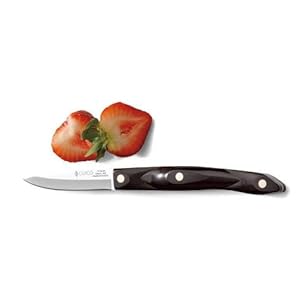 I've pared down my kitchen once or twice since then, and here are a few kitchen pleasures that I really would hate to lose:
Cutco Knives
http://www.cutco.com/home.jsp
Why: Well-balanced; blade runs through the entire handle; stays sharp; easy care; excellent blade; lifetime warranty
It really sucks when I'm slicing and dicing at someone else's house and I discover their knives are crap. Someone told us early on to invest a chunk of money in a really quality knife set. I rarely run across another set of knives that even begin to rival the balance or edge of a Cutco blade. Go get yourself a couple, especially the one they recommend for onions.
Tupperware Spatula/Scraper and Small Colander
http://order.tupperware.com/coe/app/home

Why: Spatula is heavy enough to do the job yet pliable so it actually scrapes a bowl instead of abusing it. Mini colander is just so dang handy.
Unfortunately, both of these items are "out of print," so to speak, in the Tupperware universe. But you can find them on eBay
I'm convinced the BEST spatula in the world is produced by Tupperware. I love this one.... when I lost my old one, I tracked down a Tupperware Lady within days to get another one. Unfortunately, Tupperware has discontinued my white version, so I'm hoping their "Saucy Silicone Spatula" is an acceptable substitute (despite the stupid alliterated appellation).
And I have to give a shout-out to the Small Colander. Every time I drain a can of, well, anything, I thank the industrial designers at Tupperware for making the perfect tool.
Speaking of perfect tools....
Pampered Chef
http://www.pamperedchef.com/ordering/shopOnline.tpc
Why: Everything they make is well-made, useful, durable, and reliable.
I stocked my kitchen with PC merch back when I and all my newly-married friends were hosting parties, and the investment has paid off. I could list everything, but these are the pieces I really appreciate.....


And who wouldn't want .....
Random Heat-resistant Cooking Fork
 Why: Who doesn't want to poke at stuff in the pan with a giant fork?
We bought ours at a kitchen store up near DC somewhere one time when we were on vacation, but you can find them on Amazon. Mine's red.  I prefer a fork to a spoon when cooking -- you mix things in better, you can beat up ground meat properly as it cooks, you can really get in there and stir things around. Get one.
Cast Iron Skillet
http://lodgemfg.com/
Finally got one. 'Nuff said. You can even throw the thing on the grill. This is love.
PS. I have a flat-top electric range (which I also love) and I was scared away from cast iron for years because the manufacturer's documentation said cast iron skillets could shatter the cooktop. I've since learned that my Maytag range is downright durable and easy to clean, and I've not had any problems using cast iron on the cooktop.
 LeCruset Mini Stockpot
http://cookware.lecreuset.com/
Why: It's just perfect for cooking nearly anything for 2-4 people without scorching.
Maybe someday I'll be able to afford a LeCruset dutch oven. The dang things cost as much as a food processor, which I can't afford either, so I figure I'll wait a few years and see if I can snag one for Xmas. Till then, I've fallen in love with this petite yet incredibly useful enameled pot.... It makes amazing sauces, soups, pasta dishes, risotto, shrimp and grits, etc. It even showed up as a centerpiece at a recent party, filled with ice and cold Cokes for the kiddos. The enameled metal holds its temperature well.
This is one of the few things I own, in addition to my Calphalon cookware and PC stoneware, which requires hand-washing. Otherwise, I'm a big fan of "dishwasher safe" -- including my Noritake china. I hate to handwash stuff.
A couple cookbooks that explain HOW to do stuff or WHY
You don't need recipes anymore.... you can track down millions online instantly, complete with how-to videos and user ratings to make sure you don't pick a gross one. So I don't need to collect cookbooks. I do like to have a couple good ones on hand to help me with difficult recipes (not that I make difficult recipes much; I'm too lazy) or to explain why certain kinds of cooking methods are better for a particular recipe.
So, I really value.....
*Joy of Cooking (that classic kitchen workhorse)
*anything by Alton Brown (because he teaches you HOW to cook and WHY it works)
In the end, though, I don't think cooking is all about "the stuff." It's mostly about finding garden-fresh or locally-grown produce that's in season and making that taste AWESOME.... and enjoying it all the while.
PERFECT LAST-MINUTE COBBLER FOR TWO
I originally got this recipe on a flier from the Italian Market & Grill restaurant in Greenville, SC.... and tweaked it. 
You need:
2cup baking dish (I use a large Corningware round ramekin)
1 fresh peach
2-3T butter*
3/4 cup flour (or Bisquick)
3/4 cup white sugar
3/4 cup milk (or buttermilk or cream or whatever)
Extra Credit: 1/2 tsp vanilla extract OR amaretto OR almond extract; pinch of salt; dash of nutmeg or ginger
--Heat oven to 375
--Throw the butter into the baking dish and toss it in the oven as it preheats to melt the butter.*
--Chop up the peach. Don't stress it. Just chop it. (Peel it first. No one wants to eat fuzz.)
--Mix together everything else in a small bowl.
--Pull the baking dish and melted butter out of the oven, carefully. Pour the mixture into the baking dish. Don't stir it into the butter, just leave it. Add the chopped peach on top.
--Bake for about 40min, till it looks "done" -- not runny, but not burnt on the edges either. Like a soft cake.
MMMMMMMMMMMMM 
*If I hear that you used some kind of nasty margarine or other icky excuse for God-given butter, I *will* come find you. This is a cobbler with fresh, in-season peaches. Use butter!
Awhile ago I codified some key tenets about a biblical view of "sin." You can find that entire post here, and it's pretty short, designed for a quick read. I recommend visiting before reading on.....
On Sin
http://lorojoro.xanga.com/707633710/on-sin-for-camille-/
It's been on my mind for a while now to set down some more thoughts about defining sin biblically. Again, nothing I say here is new. This is orthodox, standard theology. But I need to hear it. And I run into these misunderstandings repeatedly.
In short form:
1. As believers, we must recognize the primary authority of the Word in defining sin.
1a. Another way to say it: God gets to define what sin is. I don't. Neither does my pastor, the Pope, or anyone else....though I would be foolish to think I can sort this out by myself.
Does the Bible, rightly and carefully interpreted, say this is WRONG?
If not, you don't have the right to say it's sin. Period.
More on this later.....
2. The Spirit and the Word govern my conscience, a God-given early warning system. But the system has to be calibrated correctly to work right.
Rightly adjusted, my conscience can properly identify sin. But my conscience or my feelings or my traditions or expectations or experiences are not a substitute for a biblical definition of sin. And my conscience was warped by the Fall, just like everything else.
When you start to do something, does your conscience say STOP? Then STOP. But go find out if your conscience was reacting biblically because.....
2b. The "weaker brother" gets no medals for being weak. In fact, demanding a higher standard than God does is a sign of IMmaturity!
Paul talks a lot about this in Romans 14 and 1Corinthians 8-10. If I entice someone with a weak conscience to do something that person feels is wrong, I have overstepped the line.
But notice in both letters, Paul is taking time to ADJUST the weak consciences about the hot button issues of the day from a biblical standpoint. It's not ok to leave people thinking they have got it all sorted out with their fancy system of rules. Replace "meat offered to idols" with drinking beer, listening to screaming metal music, celebrating Halloween, or smoking ... you get the idea. Pastors and mentors are in charge of helping us adjust our consciences so they sound a warning at things that really are sin, not just stuff that bothers us.
3. We should acknowledge the wisdom of experienced Christians and submit ourselves to the elders who shepherd our churches when we choose how to act in the Body of Christ.
Nope, not in this alone. I don't get to make up my own Bible interpretations.
4. If it's a gray area, then it's not sin... by definition.
Biblically, "Sin" means sin. As in.... Wrong. Evil. Twisted. Polluted. Dirty. DONT DO IT.
This should not be confused with "inappropriate," "unwise," "dancing too close to the line" or anything in a similar "gray area.
This, folks, is where it all hits home. As you follow the Spirit and the Word and walk in the fellowship of the Body, you WILL come into conflict with other believers' ideas of sin and righteousness. Are you willing to set aside the condemnation that arises so naturally in each of us when we find people who disagree?
I don't get to define sin for you, outside God's commands....which are difficult enough,
Building a fence around the Law to keep yourself or others from breaking it? That's Pharisaism. No way around it.
ILLUSTRATION
A King knows there's a big lake in the middle of his kingdom which is so dangerous, people drown when they try to swim in it. So he makes a Law for the people: Do not swim in the lake. His overseer comes along and says, Hey, if we build a fence here, no o e can swim in the lake, so no one will drown! So he puts up a nice big fence, and labels it with large signs reading DO NOT APPROACH FENCE.
safe? Sure.
But that's Pharisaism. And Jesus HATED it.
EXAMPLES
God says, "do not commit adultery." Jesus unpacks this command in Matthew 5 and shows how the deep meaning of the command is "Don't lust."
What should you do?
Don't lust.
What about setting a rule for myself that I won't ever be in a car alone with the opposite sex?
Ok, fine....but you're fence building.
I think I'm beginning to understand in a TINY way how ridiculous it is that life boils down to Two Great Commandments. Love God with everything in you as hard as you can all the time, and love your neighbor like you love yourself.
Such a straightforward mandate really scares some people: they are afraid, I guess, that God underestimated man's sinfulness or our need of rules to make us better people or whatever. Yeah, cuz Grace is just a pushover.... Right.
Joey and I were talking today (it's time for me to wrestle a class schedule into place for the upper school) and at one point it occurred to me that his job demands much servant-hearted love from him to us, the teachers and students and parents. I mean, teaching is heavily relational at NCS (a style that I am bold enough to call biblical, and perhaps normative) but we teachers aren't called even to the level of sacrifice that Joey is. I thought of the verse in either Matthew or Mark where Christ tells the disciples that while the Gentiles make a big deal of leaders by lifting the up, Kingdom leadership is marked by self-sacrificing servanthood. "Truly, I say to you, he who would be the greatest among you must be the servant of all." "Except a corn of wheat fall in the ground and DIE, it cannot bear fruit." This love stuff isn't for sissies.
As a teacher, I can't really help a student unless I "own" his problems as my own. Human nature says, "Sink or swim, kid, I gave you the tools, now make it work." Grace-based education says, "Even the classroom must model Christ as the Master Teacher." And that means I can't just leave behind a set of directions and walk off. Dammit.
Truth is, I'm a terrible lover. I love all the wrong things: my own comfort and happiness, my satisfaction and success, making things easier on myself, the easy road, the whim of the moment. To actually keep the Great Commandments is going to rip my heart out.
And that's the Grace of it. A new heart is exactly the point.
Biblical living isn't rocket science. It's putting myself out in order to work actively on someone else's behalf (not merely "do no harm").
It means DIE so that I can live.
But I don't want to "die"........not like that, anyway. I want a death with glory and pizzazz. There's no pizzazz in plodding along, loving people. It's hella inconvenient, messy, difficult, unrewarding at times, thankless, exhausting. Did I mention inconvenient?
Oh, God. Who is going to save me from the bondage of this death?
Thanks be to God, there is therefore now no condemnation to those who are IN Christ Jesus, who walk not in the way of the carnal nature, but in the way of the Spirit.
Love God with everything you are as hard as you can all the time.
Love your neighbor like you love yourself.
That really does encompass it all, folks.
God help us all.

Recent Comments